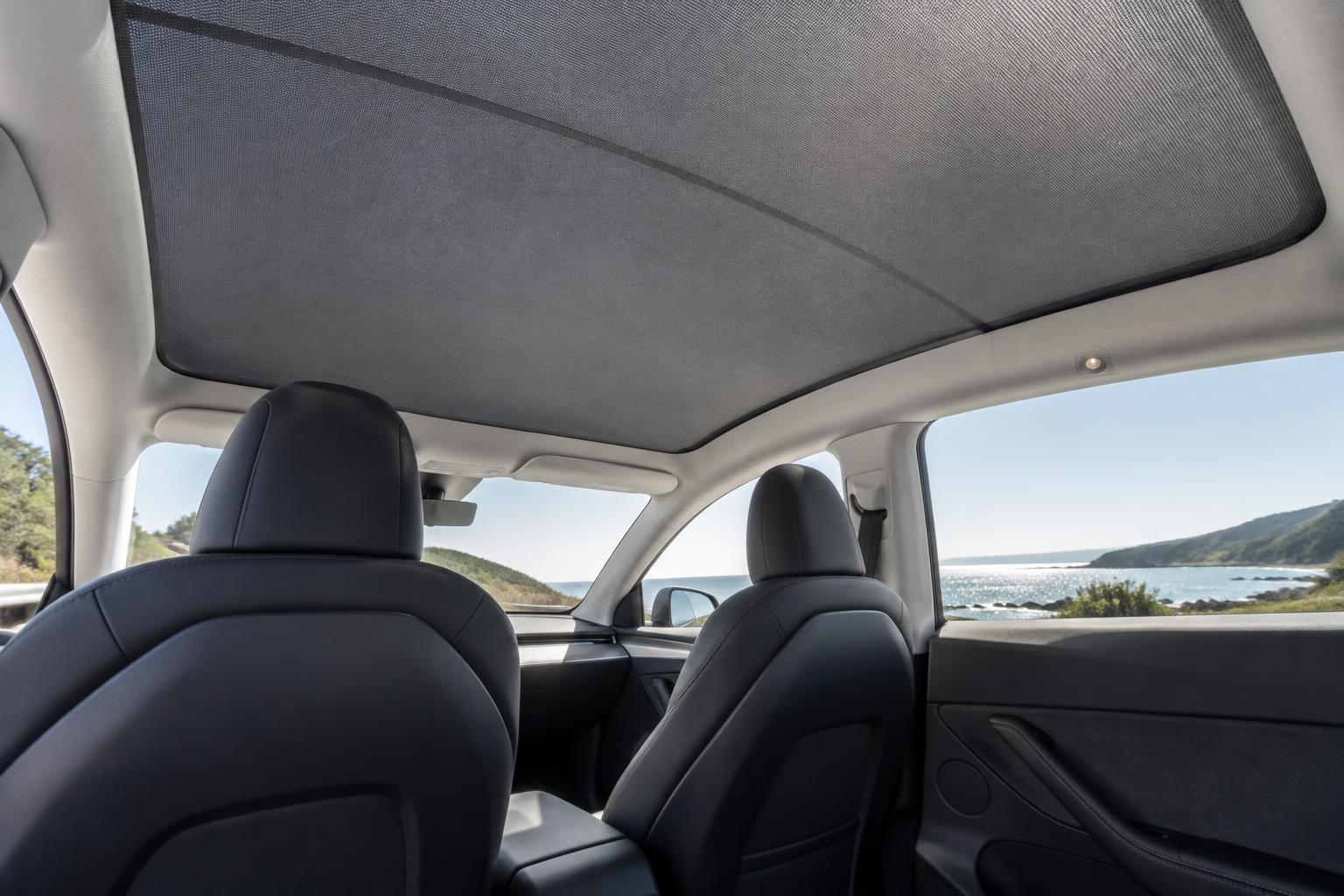
What does a Model Y roof sunshade actually do?
The Model Y’s tinted glass roof gives the cabin an open feel, but on bright days you may still notice strong overhead light and warmth from the sun. A removable Tesla Model Y sunshade adds a physical screen beneath that glass, limiting the light and direct solar exposure reaching occupants. Its main purpose is to make the space beneath the roof more comfortable, particularly when sunlight falls across your head, shoulders or lap.
The difference depends partly on the shade’s construction. Mesh filters light while preserving some of the roof’s airy appearance; a denser, opaque fabric blocks more overhead light and reduces the view through the glass. Some designs also include a reflective layer intended to reflect part of the incoming solar energy. None of these options changes the glass itself, and the roof’s existing tint does not make an additional shade redundant: they serve related but distinct purposes.
It helps to separate comfort from cabin temperature. Reducing direct sun can make sitting beneath the roof feel less intense, but a shade cannot guarantee a particular temperature reduction. Sunlight still enters through other windows, and a parked car can continue to heat up. Air conditioning remains necessary when conditions call for it. Treat a removable shade as a practical addition to your climate controls, not a replacement; when browsing sunshades, prioritise the balance of light filtering and roof visibility that suits your journeys.
Check compatibility before choosing a shade
Start with the product’s stated fitment, not simply the words ‘Model Y’ in its name. A Tesla Model Y sunshade should identify the model years or production range it supports and, where relevant, distinguish between the original vehicle and the refreshed Model Y. Do not assume a shade designed for the earlier version will fit the refreshed cabin: similar-looking glass does not confirm that the frame, edge profile or retaining clips are compatible.
Check your vehicle’s details against that listing. The registration year alone may not settle fitment, particularly around a model update, as it does not necessarily identify when the car was built. If the listing separates versions by production date, check your vehicle’s build information or ask the seller to confirm compatibility using the details they need. ‘Universal’ or ‘fits Model Y’ is not enough when more specific exclusions appear elsewhere in the description.
Next, compare the product photographs and fitting instructions with your roof’s interior layout. Look at the outline of the glazed area, the surrounding headlining and the locations where the clips are intended to sit. Confirm whether the shade is supplied as one panel or several, and whether all required fixings are included. Never assume clips can be relocated or forced behind trim to compensate for a mismatch.
When browsing Model Y accessories, prioritise explicit compatibility information over photographs alone. If refreshed Model Y fitment is unclear, request confirmation before ordering. That small check helps avoid loose edges, bowed frames and unnecessary pressure on the interior trim.
Mesh, opaque fabric or a reflective layer?
The material of a Tesla Model Y sunshade affects how much daylight enters through the glass roof and how open the cabin feels. Mesh softens overhead light while retaining some view through the roof, although visibility depends on the weave, colour and lighting conditions. It suits drivers who prefer a lighter interior rather than complete coverage. A description such as ‘high-density mesh’ does not, on its own, establish a measured level of heat reduction or UV protection.
Opaque fabric blocks the view through the covered area and generally cuts more visible light than an open mesh. This can suit passengers who find overhead brightness uncomfortable, but it gives the cabin a more enclosed feel. Reflective-backed designs add a layer intended to reflect radiant energy; some pair this with mesh or a removable liner. A silver finish alone is not proof of thermal performance. Look for product-specific test information before relying on claims about temperature reduction, UV blocking or insulation.
For storage, construction matters as much as fabric. A flexible mesh shade may pack neatly, but its folding method depends on the frame. Thicker opaque fabrics and layered designs can be bulkier, while reflective coatings may need gentler handling to avoid creasing or damage. Follow the supplied folding and cleaning instructions: do not assume any shade is machine washable. When comparing roof sunshades, check whether liners detach, how the shade packs away and whether care guidance is clear, alongside your preferred balance of daylight and coverage.
Coverage, attachment points and storage: the details that matter
A Tesla Model Y sunshade should cover the intended glass area without relying on excessive tension to hold its shape. Look closely at product photographs: a neat fit around the perimeter helps limit strips of direct sunlight, while a loose centre can sag into the cabin. Single-panel designs avoid a central join; multi-panel designs may be easier to handle and fold, but check how the sections meet. Neither layout guarantees a better fit on its own.
Attachment details deserve as much attention as the fabric. A useful listing should show the supplied clips, explain where they attach and confirm compatibility with your Model Y’s roof trim and vehicle version. Do not assume a visually similar clip will suit every model year. Check whether all required fittings are included and whether replacements are available. Avoid products whose fitting instructions suggest forcing clips behind trim or interfering with curtain airbag deployment areas.
Storage matters if you plan to remove the shade during darker months or whenever you prefer an unobstructed roof view. A supplied pouch keeps folded panels together and protects the fabric from snagging against other luggage. Check the packed dimensions rather than judging by the installed size, and look for clear folding instructions. A separate pocket for clips is useful, though not every pouch includes one.
When comparing roof sunshades, use this checklist: confirmed vehicle compatibility; clear photographs of edge coverage and panel joins; a complete clip set; illustrated fitting and folding guidance; and stated packed dimensions. These details make everyday ownership simpler than a listing focused only on fabric colour.
How to install a roof sunshade securely
Start with the car parked and read the sunshade manufacturer’s fitting instructions in full. A Tesla Model Y sunshade should match your vehicle’s roof layout and the model years specified by its maker; do not assume every kit uses the same clips or attachment positions. Lay out the shade and supplied fittings, identify the front and rear edges, and check for damaged clips or bent frame sections before lifting it into place.
Offer the shade up to the glass roof and align it as directed, ideally with a second person supporting the opposite side. Fit only the supplied attachments at the locations shown in the instructions. Never force a clip behind the headlining or pillar trim, and do not prise panels away to create a mounting point. If a fitting resists gentle placement, stop and check its orientation and compatibility rather than pushing harder.
Keep airbag deployment areas clear throughout installation. Consult your Model Y owner’s manual for airbag locations, and do not route straps, tuck fabric or place clips across those areas. If the sunshade instructions leave an attachment point unclear, ask the manufacturer to confirm it before proceeding. When comparing roof sunshades, look for clear, vehicle-specific fitting guidance.
Once installed, check every attachment with a light touch and inspect the shade from each seat. It should sit evenly, without sagging fabric, loose corners or fittings that shift under gentle pressure. Confirm that nothing obstructs visibility or interferes with the sun visors, then recheck the installation after your first drive.
Using a sunshade alongside your Tesla’s climate controls
A Tesla Model Y sunshade and the car’s climate controls address different sources of discomfort. A roof shade intercepts some of the sunlight entering through the glass above you, helping reduce glare and the sensation of direct sun on your head and shoulders. Air conditioning cools the cabin air. Used together, they can make a sunny journey more comfortable, but a shade cannot maintain a safe cabin temperature on its own.
Before setting off, use the Tesla app to start the climate system, or set up scheduled preconditioning where available in your vehicle’s software. This gives the cabin time to reach a comfortable temperature before you get in. When the car is plugged in, preconditioning can draw power from the charging supply rather than relying solely on the battery. Keep the shade fitted if you want overhead screening during the drive; remove it when you prefer a clearer view through the roof.
Once underway, adjust the temperature and airflow to suit everyone on board rather than assuming the shade removes the need for cooling. Its effect will depend on the material, coverage and conditions outside. When comparing roof sunshades, prioritise secure fit and straightforward removal so you can adapt the cabin to changing weather.
Crucially, a sunshade does not make a parked Model Y safe for unattended children or pets. Cabin Overheat Protection is not a substitute for supervision, either. Never leave children unattended in the vehicle, and do not rely on a shade to protect an animal from heat.
Your final buying checklist
Before choosing a Tesla Model Y sunshade, confirm that the listing explicitly covers your vehicle’s model year and roof configuration. Do not assume that every Model Y shade fits every version, particularly when comparing vehicles built before and after a design update. Check the product’s compatibility notes and fitting instructions, rather than relying on photographs or a broad model name alone.
Next, match the construction to your priorities. Mesh allows some light through, while an opaque fabric provides a more enclosed feel; a reflective layer may offer additional protection from direct sunlight, depending on its design. Check whether that layer is included or sold separately. Look for clear material descriptions, neatly finished edges and a frame designed to hold its shape. Coverage matters too: confirm which areas of the glass roof the shade covers and whether the design uses one panel or several.
Review the attachment method before ordering. The listing should explain how the shade is secured, which clips or fittings are supplied and whether installation requires tools. Follow the specified mounting positions, and avoid any arrangement that interferes with trim or airbag deployment areas. If you plan to remove the shade regularly, check how it folds, whether a storage bag is included and where the packed shade will fit in your car.
Finally, compare the specifications of relevant Tesla Supreme sunshades against this checklist: confirmed fit, suitable fabric, intended coverage, secure attachments and manageable storage. If a detail is missing, clarify it before buying rather than treating a general description as confirmation.
Frequently asked questions
Does a Tesla Model Y need a roof sunshade?
A Tesla Model Y does not need a roof sunshade, but one can make sunny journeys more comfortable. The panoramic glass roof already provides UV protection, yet sunlight can still feel warm overhead. A shade is worth considering if you regularly park outside, carry rear-seat passengers or prefer less overhead light. Browse our sunshades and check compatibility with your particular Model Y before choosing.
Does a Model Y sunshade help keep the cabin cooler?
Yes, a Model Y roof sunshade can help reduce solar heat entering the cabin and make direct sunlight feel less intense. The effect depends on the shade’s material, coverage, weather and parking conditions, so there is no single temperature reduction to expect. Mesh designs filter light while retaining some openness; more opaque designs block more light. Neither replaces air conditioning or makes a parked car safe for unattended children or pets.
Will a pre-refresh Model Y sunshade fit the refreshed Model Y?
Do not assume a pre-refresh Model Y sunshade will fit the refreshed Model Y. Compatibility depends on the shade’s shape, dimensions and fixing points, not simply the Model Y name. Choose a product whose fitment information explicitly covers your version, and check any supplied installation guide. If the listing is unclear, confirm compatibility before ordering rather than relying on registration year alone or forcing an older shade into place.
How do you install a Tesla Model Y roof sunshade?
Most clip-in Tesla Model Y roof sunshades are installed by unfolding the shade, attaching the supplied clips as instructed and positioning it beneath the glass roof. Work with the car parked, and follow the product’s guide for clip locations and orientation. Avoid forcing clips into trim or placing them near airbag deployment areas. Once fitted, check that the shade sits evenly, feels secure and does not sag into passengers’ headroom.
Can you leave a Model Y roof sunshade fitted while driving?
Yes, a Model Y roof sunshade can usually stay fitted while driving if it is designed for in-use installation and securely attached. Check the manufacturer’s instructions, as a roof shade is different from a windscreen shade intended only for parking. Before setting off, make sure all clips are seated and the fabric does not obstruct your view or interfere with airbags. Remove or refit it if it slips, sags or comes loose.