1. Start with fit: not every Model Y accessory is interchangeable
Before choosing an accessory, identify your Model Y’s build period, seating configuration and whether it is the original or refreshed version. Tesla updates its vehicles over time, and a product labelled simply “Model Y compatible” may not fit every example. Cabin trim, centre-console details, seat layouts and exterior components can differ. For UK cars, check right-hand-drive compatibility wherever the accessory follows the shape of the driver’s footwell or dashboard.
Product photographs are useful, but they should support a clear compatibility statement rather than replace one. Look for the relevant production years, any exclusions and installation instructions. For mats, boot liners, sunshades and console trays, compare the listing with your own vehicle. If your car falls near a model-change period, confirm the fit before ordering rather than relying solely on its registration year.
Build your shortlist around three questions: what gets dirty, what is awkward to store and what would make your regular journeys easier? Most owners will get more use from fitted protection and sensible storage than from a long list of decorative additions. Start with the Tesla Model Y accessories collection, then narrow your choices by the exact vehicle fit and the problem you want to solve.
2. Floor mats and boot protection: the strongest starting point
A well-fitting set of all-weather floor mats is one of the most useful purchases for a Model Y used throughout the year. Raised edges help contain water, grit and spills, while a shaped heel area can make routine cleaning easier. Look for a material that stays stable underfoot, has a secure fit and can be removed without tipping collected dirt onto the carpet. A premium mat should sit neatly rather than curl at its edges.
Driver’s-side fit is especially important. A mat must not interfere with either pedal, and it should use the intended retention method where applicable. Never stack a new mat over an existing one. After installation, check pedal clearance with the vehicle safely parked, and inspect the mat again after the first few journeys. Browse floor mats with your steering position and model version in mind.
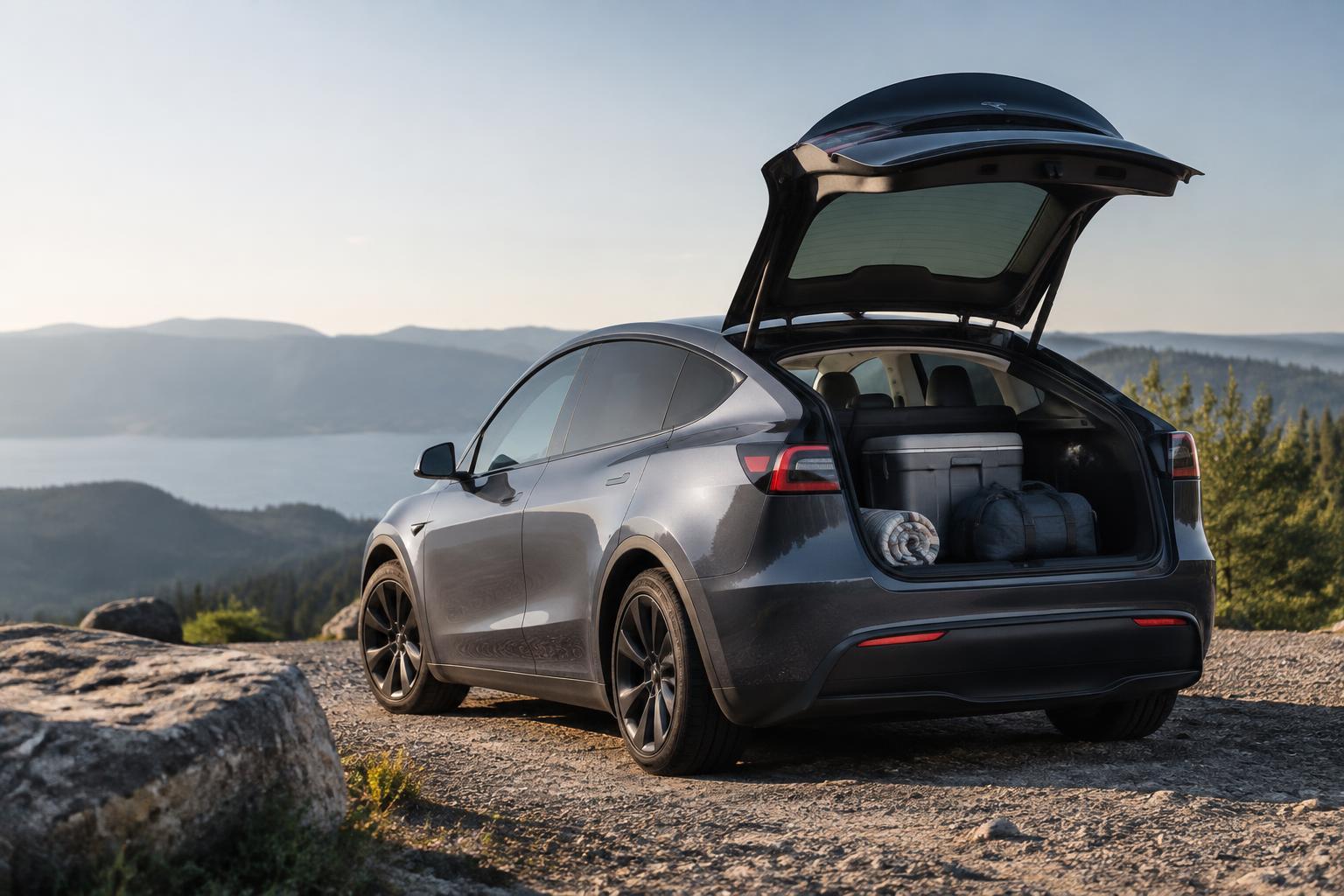
For the rear load area, choose protection that matches how you use the car. A boot liner suits shopping, pushchairs and wet outdoor equipment; seat-back protection is useful when you regularly fold the rear seats for longer loads. Check that the liner allows convenient access to underfloor storage and does not obstruct seat operation. Removable, segmented pieces can be more practical than a single large liner when you frequently use those compartments.
3. Organisers that make the Model Y’s storage more useful
The Model Y has a front boot, rear luggage space and additional storage beneath the rear load floor, although the precise arrangement varies by configuration. That capacity is useful, but loose items can still disappear into deep compartments. A centre-console tray gives smaller essentials a defined place without forcing you to rummage through the main storage area. Check that it clears the console lid and leaves any ports or other functions accessible.
Boot dividers, fitted storage bags and compartment organisers help separate clean luggage from damp footwear or charging equipment. Choose items with handles that are easy to reach when the boot is loaded. Washable surfaces are worth prioritising for sports equipment, gardening supplies or dog-walking gear. Explore organisers and boot and frunk storage for solutions that suit the items you carry regularly.
Avoid filling every available space simply because an accessory exists for it. An organiser that reduces access to a frequently used compartment can create more inconvenience than it solves. Keep heavy objects low and secure luggage appropriately; a storage tray is not a crash restraint. If fitting anything beneath a seat, confirm that it cannot obstruct seat movement, wiring or ventilation outlets.
4. Charging and phone accessories: buy for your actual routine
Charging accessories should follow your home and travel arrangements. A UK-market Model Y uses a Type 2 connection for AC charging and CCS Combo 2 for compatible DC rapid charging. A separate Type 2 cable is useful at untethered AC charge points, but you do not use your own AC cable at a Tesla Supercharger. Check what equipment you already have before buying a duplicate, and select cables with suitable ratings and clear safety documentation.
For home charging, a tidy cable holder or storage bag can be more useful than another adaptor. Keep connectors clean and dry, inspect equipment for damage and follow both the vehicle and charging-equipment instructions. Do not improvise with domestic extension leads or unapproved adaptors. If you are planning a permanent home charging installation, have a suitably qualified installer assess the supply and installation requirements. Our charging accessories collection is a starting point for supporting equipment, not a substitute for that assessment.
Test your phone with the car’s existing charging arrangement before adding a mount or separate charger. Model Y equipment can vary by build, and thick cases or poor alignment may affect wireless charging. If you need a cable, confirm the connector and power requirements for both the phone and the vehicle port. Any mount should keep the screen readable without blocking your view, obstructing an airbag or encouraging phone use while driving.
5. Sunshades and cabin comfort: choose targeted improvements
The Model Y’s panoramic glass roof gives the cabin an open feel, but some passengers prefer additional shade in bright weather. A correctly fitted roof sunshade can reduce direct sunlight and improve perceived comfort, particularly for rear-seat passengers. Choose one shaped for your exact roof and interior trim, with secure attachment points and straightforward removal. Do not assume that the same shade fits both original and refreshed Model Y cabins.
A windscreen shade is a separate purchase for use while parked. Look for a design that fits around the mirror area without putting pressure on trim or camera housings. Foldability matters if you intend to use it every day: a shade that is awkward to store often gets left at home. Compare sunshades by fit, coverage and storage size rather than unsupported temperature-reduction claims.
For general comfort, start with seating position, climate settings and tyre pressures before adding accessories. Tesla’s recommended cold tyre pressures are shown on the vehicle’s tyre and loading information label. Be cautious with aftermarket door seals and add-on insulation: poor installation can affect drainage, door closing or trim fit. Likewise, seat covers must be explicitly compatible with the seat’s airbag arrangement and should not compromise heating or ventilation where fitted.
6. Exterior protection, wheel covers and practical styling
Mud flaps can be worthwhile if your routes regularly include wet country roads, loose surfaces or winter grime. Their purpose is to help limit spray and debris thrown towards the lower bodywork, not to make the paint immune to damage. Choose a design matched to your car’s body shape, inspect its mounting method and check clearance. Protective film on vulnerable areas is another option, but the quality of surface preparation and installation matters as much as the film itself.
Wheel accessories need particularly careful matching. A cover designed for one wheel diameter or design should never be assumed to fit another, even if both wheels are fitted to a Model Y. Check the underlying wheel specification, retention system and access to the tyre valve. Correctly designed aero covers may affect aerodynamic performance, but avoid expecting a particular range improvement without reliable, product-specific evidence. Browse aero covers only after confirming your wheel type.
For styling additions, favour secure fit and easy maintenance over complicated shapes that trap grit or water. No accessory should obscure lights, number plates, cameras or sensors, including parking sensors where fitted. Adhesive trim also needs a clean, suitable surface and installation conditions that meet the manufacturer’s instructions. The protection collection is a sensible place to prioritise functional upgrades before purely cosmetic ones.
7. Family, pets and travel: build a useful buying order
For family use, washable boot protection, simple organisers and compact travel bags usually earn their space quickly. If you carry a dog, choose an appropriate restraint or secured crate rather than relying on a seat hammock to keep the animal safe. Any crate should fit the available space without preventing the boot from closing correctly or compromising ventilation. Check dimensions against the car itself, not just its advertised luggage capacity.
Roof racks and bike carriers are more specialised purchases. Use equipment explicitly approved for the relevant vehicle configuration and follow the vehicle and accessory manufacturers’ load limits. For a roof load, account for the rack, box and contents within the applicable limit; incorrect attachment around the glass roof can cause expensive damage. Towbar-mounted carriers also require a compatible towbar installation and compliance with its loading limits. Check access, lighting and number-plate visibility before travelling.
A practical buying order is floor mats first, then boot protection, followed by one or two organisers that solve a real storage problem. Add charging equipment only where your routine requires it, then consider sunshades, pet equipment or travel accessories. Treat styling as the final stage rather than the foundation. This approach gives you a coherent set of accessories you will actually use, while leaving room to refine the car after a few weeks of ownership.
Frequently asked questions
What are the best Tesla Model Y accessories to buy first?
For most owners, fitted all-weather floor mats, a boot liner and a centre-console organiser are useful first purchases. They address everyday dirt and clutter without changing how the car operates. After that, choose around your routine: an AC charging cable for untethered charge points, sunshades for regular summer travel or appropriate protection and restraints for pets.
Do older Tesla Model Y accessories fit the refreshed Model Y?
Some may fit, but compatibility should never be assumed. Changes to bodywork, cabin trim, seats and storage areas can affect accessory fit. Check the product’s stated build-year range and any refreshed-model exclusions. For UK vehicles, also confirm right-hand-drive compatibility where relevant, particularly for floor mats and dashboard-related accessories.
Are all-weather floor mats worth it for a Tesla Model Y?
Yes, particularly if you regularly deal with rain, mud, children or outdoor equipment. A fitted mat with raised edges can make cleaning easier and help protect the carpet underneath. Fit matters more than appearance: the driver’s mat must stay secure, remain clear of the pedals and never be stacked over another mat.
Does the Tesla Model Y need a roof sunshade?
It is optional rather than essential. The glass roof already has built-in solar protection, but an additional shade can be helpful if passengers find direct sunlight uncomfortable. Choose a model-specific design with secure fixings. A sunshade does not replace climate control or make it safe to leave children or animals unattended in a parked vehicle.
Will aftermarket accessories affect my Tesla warranty?
An aftermarket accessory does not automatically remove all warranty coverage, but damage or faults caused by unsuitable parts, modifications or incorrect installation may not be covered. Read the warranty terms applicable to your vehicle and keep installation records. Seek clarification before fitting electrical modifications, load-carrying equipment or anything that affects safety systems.