1. Check compatibility before choosing accessories
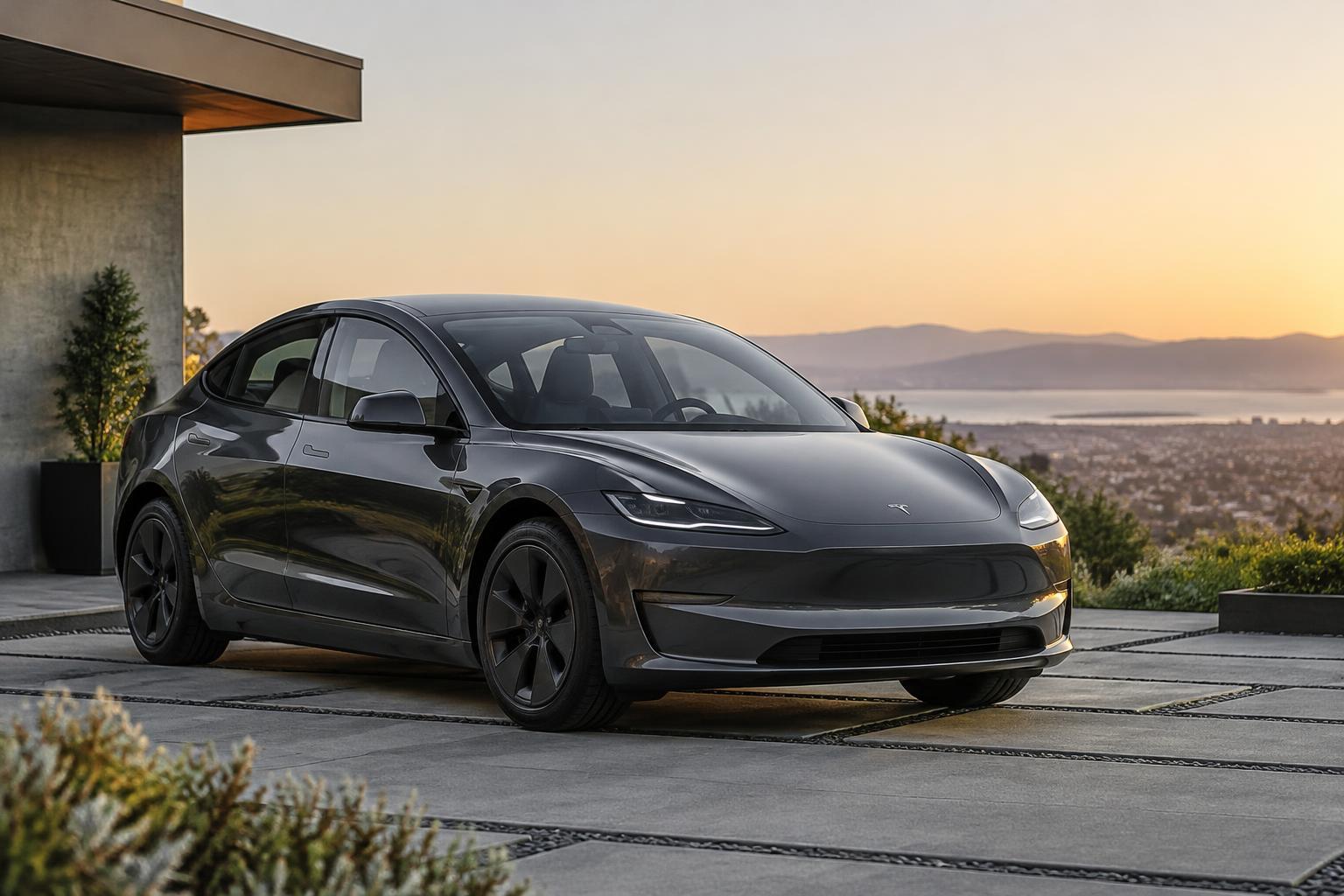
Model 3 accessories are not universally interchangeable. The car has had changes to its centre console, interior trim and exterior design, including the substantial refresh often referred to as Highland. A product labelled simply ‘for Model 3’ may therefore be too vague. Check the supported production period, the manufacturer’s fitment notes and, where relevant, whether the item is designed for a right-hand-drive car.
Floor mats, console trays, sunshades and exterior protection pieces deserve particular attention. Registration year alone may not settle compatibility, especially around a production change. Compare the product photographs with your own cabin and bodywork, and ask for clarification if the listing does not clearly identify your version. Wheel accessories must also match the actual wheel design and size, not merely the vehicle model.
A sensible starting order is protection, storage and accessories for your regular journeys. Browse Tesla Model 3 accessories with a short list of problems to solve: muddy shoes, loose sunglasses, shopping sliding around or a hot cabin when parked. This approach usually produces a more useful result than buying a large bundle of items you have not yet needed.
2. Fitted floor mats: the strongest first purchase
If your Model 3 regularly encounters wet shoes, sand, dog hair or muddy sports kit, fitted all-weather mats are a practical first purchase. A shaped mat with raised edges helps contain dirt and small spills before they reach the carpet. Look for coverage around the footwell edges and a surface that can be cleaned without awkward grooves trapping debris.
Fit is more important than a dramatic-looking tread pattern. The driver’s mat must sit securely and stay clear of the accelerator and brake throughout their travel. Never stack a new mat over an existing one, and use the retention system where provided. Right-hand-drive compatibility is especially important for the driver’s footwell, so do not assume that photographs of a left-hand-drive set show an equivalent fit.
Choose floor mats according to use rather than appearance alone. Rubber-like or thermoplastic designs suit frequent wet-weather cleaning; textile mats may appeal more if you mainly drive in clean, dry conditions. Remove mats to wash them, follow the maker’s cleaning guidance and let them dry before refitting. Even a well-contained mat should not be left holding water indefinitely.
3. Console organisers that keep the cabin uncluttered
The Model 3’s minimalist cabin works best when small objects have a defined place. A fitted centre-console tray can keep keys, charging cards, sunglasses and loose change within reach instead of leaving them at the bottom of a deep compartment. For many owners, this is a more useful purchase than decorative trim or additional dashboard-mounted storage.
Look for a tray that lifts out easily, leaves access to the space underneath and does not obstruct the console lid or charging area. Removable liners make cleaning simpler and can reduce rattles from hard objects. Console designs differ between Model 3 versions, so check the shape and layout carefully before choosing from the organisers collection.
Door-pocket inserts and discreet storage dividers can also help, but resist adding compartments everywhere. Anything fitted around a seat must remain clear of its adjustment mechanisms, wiring and restraint components. Keep loose items out of the driver’s footwell, and avoid storage accessories that cover controls or make it harder to retrieve an essential item safely when parked.
4. Boot and frunk protection for shopping, luggage and pets
The Model 3 has a rear boot, underfloor storage and a front boot, commonly called the frunk. These spaces are useful for separating everyday luggage from messier items. A fitted boot liner is worthwhile if you carry pushchairs, gardening supplies, sports equipment or a dog, while a frunk liner can make cleaning up after muddy footwear much easier.
Check whether a rear liner still allows convenient access to the lower storage compartment. A very stiff design may be awkward if you use that area frequently. For bags and dividers, measure the space you actually want to use and leave clearance for the boot or bonnet to close without pressing on the contents. Do not overfill the frunk or force the bonnet shut.
Explore boot and frunk storage for solutions that suit your routine, rather than filling every compartment with a dedicated bag. A small organiser may be enough to stop shopping moving around. Storage accessories are not automatically load restraints, however: keep heavier items low, secure loads appropriately and follow the vehicle handbook’s loading guidance.
5. Sunshades and screen protection: buy for your conditions
The Model 3’s glass roof creates an open-feeling cabin, but some occupants prefer additional shade in strong sunshine. A removable roof sunshade can reduce direct sunlight reaching passengers and improve comfort when parked or travelling in bright conditions. It does not replace climate control, and its usefulness will depend on where you park and how sensitive you are to overhead sun.
Choose sunshades made for your roof and interior version, with fittings that hold securely without damaging trim or interfering with airbags. A windscreen shade is another straightforward option for outdoor parking, but it must be removed before driving. Neither type of shade makes it safe to leave a child or animal unattended in a vehicle.
A touchscreen protector is more optional. A well-fitted protector can provide a replaceable layer against everyday marks, while a matte finish may reduce reflections at the cost of some visual clarity. Check screen dimensions and fitment, clean thoroughly before installation and avoid excessive liquid around the display. For many owners, careful cleaning with a suitable microfibre cloth is sufficient.
6. Charging and phone accessories that fill a real gap
Before buying charging equipment, establish what came with your car and what your usual charging locations provide. Equipment supplied with a Model 3 can vary by purchase date and market. In the UK, Model 3 uses Type 2 for AC charging and CCS Combo 2 for compatible DC rapid charging. A tethered charger already has a cable attached; an untethered AC socket generally requires you to bring a suitable cable.
Choose charging accessories for a specific need, such as keeping an existing cable tidy or carrying one for untethered public charging. Any cable or portable charging equipment must be correctly rated and compatible with the vehicle and supply. Do not use improvised adapters or ordinary household extension leads as a charging workaround. A home charging installation should be assessed and installed by a suitably qualified professional.
Phone accessories need similar restraint. Many Model 3 versions already have built-in wireless phone charging, so test your handset and case before adding another charging solution. If you need a cable, check the connector fitted to your car, as USB arrangements have changed over time. A phone mount should have a clear purpose and must not obstruct visibility, airbags or access to controls.
Also check your existing Dashcam setup before buying a separate camera. Model 3 includes Dashcam and Sentry Mode functionality using the car’s cameras, subject to configuration and suitable storage. Confirm your recording settings and consult your vehicle’s manual for storage requirements; USB port capabilities differ by version. Separate equipment is worth considering only if you need a feature the built-in system does not provide.
7. Exterior protection and the accessories you can skip
Mud flaps can be worthwhile if your regular routes leave the lower bodywork covered in road spray and grit. Look for model-specific fitment, appropriate ground clearance and secure fittings that do not rub against painted surfaces. Inspect and clean behind them periodically, because trapped debris can undermine the protection you bought them to provide.
Targeted paint protection film may also make sense on frequently exposed areas, particularly if cosmetic condition matters to you. Good preparation and installation are important; badly applied film can trap dirt or leave untidy edges. Consider protection accessories in proportion to your mileage, road conditions and expectations, rather than assuming every surface needs an extra layer.
Cosmetic wheel covers, trim overlays and ambient lighting are personal choices, not essential upgrades. Wheel covers must suit the exact wheel, and you should not assume an aftermarket design will improve efficiency without reliable evidence. Avoid electrical modifications with unclear installation requirements, and do not cover cameras, lights or sensors fitted to your car.
For most owners, a measured first order is enough: correctly fitted mats, one useful console organiser and boot protection if your routine calls for it. Add sun protection or charging equipment once you have identified a genuine need. Leave purely decorative purchases until you know the car well; the best accessory is usually the one you use without having to think about it.
Frequently asked questions
What are the best Tesla Model 3 accessories to buy first?
Start with fitted floor mats and a centre-console organiser. Add a boot liner if you carry muddy equipment, pets or bulky shopping. These items address common daily needs without changing the car’s operation. Charging equipment and sunshades should follow your actual parking and travel habits.
Do older Tesla Model 3 accessories fit the refreshed Model 3?
Not necessarily. The refreshed Model 3 has changes that affect the fit of interior and exterior accessories. Console inserts, mats, sunshades and bodywork-related products should all have explicit compatibility information. Check the supported production period and compare the listing with your car rather than relying only on its registration year.
Are all-weather floor mats worth it for a Tesla Model 3?
Yes, particularly for wet-weather driving, family use or outdoor activities. Their main benefit is containing dirt and moisture in a removable, easy-to-clean layer. Choose a correctly shaped set with secure fitment, and make sure the driver’s mat cannot move into the pedals. Never layer it over another mat.
Does a Tesla Model 3 need a roof sunshade?
It is optional rather than essential. A roof shade is most useful if you often park outside in strong sunshine or passengers find overhead sunlight uncomfortable. Choose one designed for your specific Model 3 version. It can improve shade and comfort, but it does not replace air conditioning or safe parking practices.
Will fitting accessories affect my Tesla warranty?
An accessory does not automatically mean every part of the vehicle loses warranty coverage. However, damage or faults caused by an accessory or its installation may not be covered. Check the applicable warranty terms, avoid interference with safety systems and seek advice before drilling, modifying wiring or fitting components that affect vehicle operation.